The best dual boiler espresso machine balances stable brewing, strong steam, easy control, and lasting value for home baristas. This guide compares dual boiler espresso machines to help you evaluate features, performance considerations, and overall value before choosing a model for your home setup.
You know the scene: one person wants a hot latte while another waits for a fresh espresso. A single-boiler machine can make that moment feel slow, since it must switch between brewing and steaming. A dual boiler espresso machine solves this by using separate boilers for each task. I find that this design gives better temperature control, faster milk drinks, and a smoother workflow. After comparing features, controls, grinder options, steam power, and daily use, I selected five strong choices for home coffee fans who want café-style results without guessing.
Gevi Dual Boiler Espresso Machine
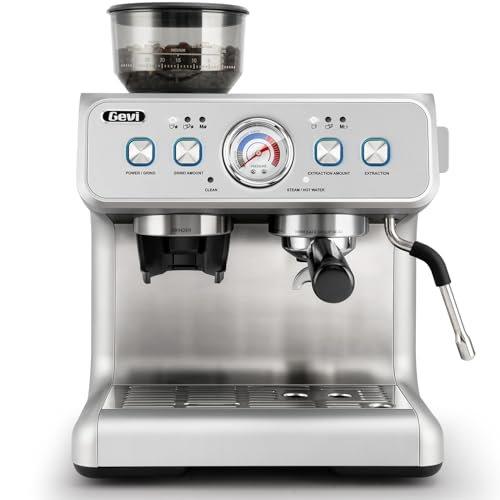
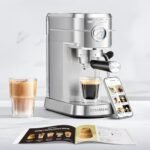
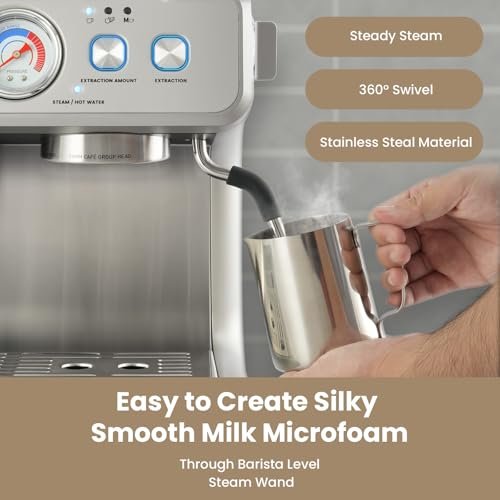
The Gevi Dual Boiler Espresso Machine stands out because it combines two boilers with a built-in burr grinder. That design helps reduce counter clutter and makes the machine feel like a complete coffee station. I like this approach for new home baristas who want fresh grounds without buying a separate grinder at once. The grinder also gives the user more control than pre-ground coffee.
A built-in grinder can make the morning routine simple, but it still requires some dialing in. Espresso reacts to grind size, dose, tamp pressure, and bean age, so small changes may improve the cup. The dual-boiler layout should help the machine brew espresso and create steam with less waiting between tasks. For a busy kitchen, that smoother flow can feel like a small luxury.
Pros:
- Built-in burr grinder saves counter space
- Dual-boiler design supports brewing and steaming together
- Fresh grinding can improve flavor and aroma
- All-in-one setup suits beginners and small kitchens
- Separate coffee and milk workflows reduce waiting
- Useful choice for users who want fewer separate appliances
Cons:
- Built-in grinders can be harder to replace or upgrade
- Dialing in the grinder may take some trial and error
- All-in-one machines may need more careful cleaning
My Recommendation
I recommend the Gevi to shoppers who want an easy starting point with fewer pieces of equipment. It is especially suitable for apartment kitchens, new espresso drinkers, and families that enjoy milk drinks. The built-in burr grinder gives it a clear advantage over machines that require a separate grinder. If convenience matters as much as maximum control, this may be the Best Dual Boiler Espresso Machine for your needs.
Its main value comes from the complete setup. You can grind, brew, and steam from one compact station. More advanced users may later prefer a separate commercial-style grinder, but many home users will appreciate the simpler workflow. Check the current price, warranty details, and included accessories before ordering, since availability and package contents can change.
Chefman Crema Deluxe Dual Boiler
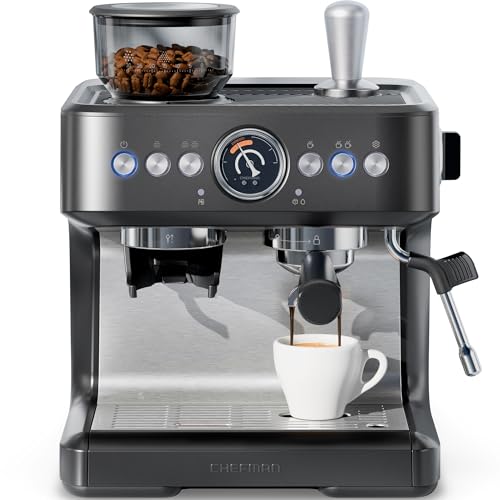
The Chefman Crema Deluxe focuses on a full café-style experience. It includes a double boiler, a coffee grinder, and a steam wand, so it targets users who want to handle the whole drink from one machine. Its listed 30 grind settings offer useful room for adjustment. That matters because espresso beans often need a finer or coarser setting as they age.
I see this model as a practical fit for households that make both straight espresso and milk drinks. The ability to brew espresso and steam milk at the same time can help when serving two drinks in a row. A steam wand also gives you more control over milk texture than an automatic frother. With practice, you can create smooth foam for lattes and a lighter cap for cappuccinos.
Pros:
- 30 grind settings provide useful adjustment range
- Built-in grinder supports a fresh bean-to-cup routine
- Double boiler design helps manage brewing and steaming
- Manual steam wand offers better milk texture control
- Good fit for users who make many milk drinks
- Combines several coffee tools in one appliance
Cons:
- Thirty settings may still feel limited to expert users
- Manual steaming has a learning curve
- More parts require regular cleaning and care
My Recommendation
The Chefman is best for home users who want a flexible coffee setup without buying a stand-alone grinder, espresso machine, and frother. I would point it toward latte fans, couples who prepare drinks together, and beginners who want to learn manual milk steaming. Its grinder settings and steam wand give more control than a basic push-button machine. For a buyer seeking the Best Dual Boiler Espresso Machine with a broad feature set, this is a strong option.
The value here comes from its range. You can start with simple espresso and slowly learn dose, grind, tamp, and milk texture. It may not replace a high-end café system for a serious competition barista, but it offers a useful middle ground for daily home use. Review the latest listing for dimensions, included tools, and service coverage before purchase.
Breville BES920XL Dual Boiler

The Breville BES920XL is a well-known dual-boiler machine for users who already own, or plan to buy, a quality espresso grinder. Its brushed stainless steel body gives it a solid, polished look on the counter. The dual-boiler system is the main attraction, since it supports espresso extraction and milk steaming at the same time. I consider this layout a major step up for people who make several drinks in a session.
This machine rewards careful preparation. A good grinder, fresh beans, a level tamp, and a clean group head all affect the final shot. The machine offers the type of control that lets an experienced user adjust the process instead of accepting one preset result. It is not the simplest pick for someone who wants one-touch coffee, but it can become a trusted home barista tool.
Pros:
- True dual-boiler workflow supports simultaneous tasks
- Strong choice for repeatable espresso preparation
- Stainless steel finish suits many kitchen styles
- Works well with a separate high-quality grinder
- Designed for users who want more manual control
- Useful for preparing several espresso drinks in sequence
Cons:
- Requires a separate grinder for the best results
- Large footprint may challenge small counters
- Manual controls may feel complex to beginners
- Stainless steel needs regular wiping to stay bright
My Recommendation
I recommend the BES920XL for the serious home barista who values control and plans to keep the machine for years. It suits users who already understand grind adjustment and want stable brewing and steaming in one system. It is also a good choice for households that serve guests often. Among the models reviewed here, it is a leading Best Dual Boiler Espresso Machine for hands-on espresso lovers.
The biggest limitation is the need for a separate grinder. That adds cost and counter space, but it also gives you freedom to choose a grinder that matches your taste and budget. I would choose this model over an all-in-one machine when espresso quality and long-term upgrade options matter most. Confirm current stock and support terms because this model has been sold for several years and listings can vary.
Breville Dynamic Duo Espresso Bundle

The Breville Dynamic Duo pairs a dual-boiler espresso machine with the Smart Grinder Pro. This bundle removes one of the hardest buying decisions for new espresso users: finding a grinder that matches the machine. The separate grinder also gives you more freedom than a built-in grinder if you later want to change your setup. I like this package for buyers who want a coordinated system from day one.
A separate grinder has a practical benefit during daily use. You can adjust the grinder without working around the body of the espresso machine, and you can replace or upgrade it later. The bundle also keeps the brewing and grinding functions apart, which can make cleaning easier. It needs more counter space than an all-in-one model, but the workflow feels more like a small home café.
Pros:
- Includes both the espresso machine and a matching grinder
- Separate grinder allows easier future upgrades
- Dual boilers support espresso and steam at once
- Good complete package for new home baristas
- Brushed stainless finish offers a classic appearance
- Useful for families that prepare several drinks together
Cons:
- Requires more counter space than an all-in-one unit
- Bundle cost can be higher than buying a basic machine
- Two appliances mean two items to clean and maintain
My Recommendation
The Dynamic Duo is best for buyers who want a full setup and do not yet own an espresso grinder. It fits serious beginners, growing coffee fans, and families that want a shared morning station. I especially like it for users who want to learn espresso without making a second major purchase right away. If your budget and counter space allow it, this may be the most balanced Best Dual Boiler Espresso Machine package.
The separate grinder gives this bundle a useful path for growth. You can begin with the included settings, then refine your process as your skills improve. The package costs more than a machine alone, but it can offer better overall value than purchasing compatible equipment one piece at a time. Check the current Amazon offer to confirm that both components and the stated accessories are included.
Tuni E2 Gen3 Dual Boiler Espresso Machine

The Tuni E2 Gen3 brings a dual-boiler layout and a strong focus on steam power. Its ivory finish gives it a softer look than the usual steel or black machine. I see it as an appealing choice for users who care about both kitchen style and milk-drink performance. The separate boiler design should help reduce the pause between pulling a shot and steaming a pitcher.
Steam power matters when you make several cappuccinos or lattes in a row. A strong wand can heat milk faster and create a smoother texture, though technique still plays a major role. You need to position the steam tip well and stop at the right temperature. This machine may suit users who enjoy learning the craft instead of relying on automatic foam.
Pros:
- Dual boilers support a more efficient drink workflow
- Super+ steam focus suits frequent milk-drink makers
- Ivory color adds a distinctive kitchen design touch
- Manual steam control can produce better milk texture
- Good option for users who value café-style preparation
- Suitable for entertaining and making multiple drinks
Cons:
- Manual steaming requires practice and attention
- Special finish may not match every kitchen
- Users should verify service and replacement-part access
- May be more machine than casual espresso drinkers need
My Recommendation
The Tuni E2 Gen3 is best for milk-coffee fans who want strong steam performance and a distinctive machine design. It fits home users who host guests, make several drinks at once, or enjoy practicing latte texture. I would not make it my first pick for someone who only drinks an occasional plain espresso. For the right buyer, it is a stylish Best Dual Boiler Espresso Machine with a clear focus on steam.
The overall value depends on how often you use the steam wand. If lattes and cappuccinos are part of your daily routine, the extra steam focus may justify the purchase. If you mainly drink black coffee, a simpler model may save money and space. Before ordering, check the latest product page for warranty information, dimensions, and the exact included accessories.
How I Compare a Dual Boiler Espresso Machine
When I review espresso machines, I look beyond the word “dual boiler.” Separate boilers matter, but they do not guarantee a perfect cup by themselves. The grinder, water quality, dose, temperature, pressure, and cleaning routine all shape the result. A good machine should make those steps easier, not hide them behind vague claims.
I first consider temperature stability. Espresso needs hot water in a narrow working range, while milk steaming needs a much higher temperature. Separate boilers let each task work at its own heat level. This can reduce waiting and help the user prepare drinks in a steady rhythm.
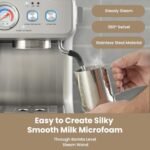
I also look at steam control. A steam wand should give enough power to heat milk quickly, but power alone does not create silky foam. The user needs room to move the pitcher and control air. I give extra value to machines that help a learner build skill without making the process feel frustrating.
Next, I review the grinder setup. A built-in burr grinder saves space and makes the first setup easy. A separate grinder takes more room but gives better upgrade freedom. I do not call one design best for everyone, because the right choice depends on your counter, budget, and interest in espresso.
Ease of cleaning also matters. Coffee oils can build up in the group head, portafilter, and brew path. Milk residue can harden inside a steam wand if you do not wipe and purge it after use. I prefer a machine that encourages good habits through simple access and clear controls.
Why Choose a Dual Boiler Espresso Machine?
A dual boiler machine uses one boiler for brewing water and another for steam. This is different from a single-boiler machine, which often changes temperature between the two tasks. That change can create a pause in the workflow. It may also frustrate users who want to prepare a latte soon after pulling a shot.
The main benefit is speed and control. You can extract espresso while the steam boiler stays ready for milk. This matters most when you make several drinks or serve guests. For one small morning espresso, the difference may feel less important.
Many dual-boiler machines also offer more control over the brewing process. Some models allow adjustments to temperature, pre-infusion, or shot timing. These features help experienced users repeat a recipe. Still, the machine cannot fix stale beans or a poor grind, so the rest of the setup remains important.
A dual-boiler machine can also grow with your skills. You may begin with a simple recipe, then explore lighter roasts, longer pre-infusion, or different milk textures. It acts like a steady road rather than a dead end. That is why many serious home users consider this class of machine a long-term investment.
What to Look For Before Buying
Boiler design and heating speed
Look for clear information about the brew boiler and steam boiler. A larger steam boiler may help when you prepare many milk drinks. A smaller system may heat faster but recover sooner under heavy use. Do not judge performance by boiler size alone; controls, insulation, and machine design also matter.
Temperature control
Stable temperature can improve shot consistency. Digital controls, sensors, and programmable settings may make repeatable brewing easier. I still advise using a good recipe and measuring your coffee. A stable machine helps, but it does not replace careful technique.
Grinder type
A burr grinder is generally more useful for espresso than a basic blade grinder. It produces a more even grind and gives you a better chance to control extraction. Built-in grinders save space, while stand-alone grinders offer more upgrade options. If a product includes a grinder, check whether it provides fine adjustment for espresso.
Steam wand design
A manual wand gives you more control over milk texture. It can make smooth microfoam for latte art, but it takes practice. Automatic frothers may feel easier for beginners, yet they offer less control. If you drink mostly lattes, give the wand and steam performance serious attention.
Controls and display
Simple controls can be a strength. A clear display may show temperature, shot time, or cleaning alerts. Too many settings can slow down a new user, so match the control panel to your comfort level. I prefer machines that let me change key settings without forcing me through a long menu.
Portafilter and basket options
The portafilter holds the coffee basket during brewing. A standard commercial-size portafilter can make it easier to find replacement baskets and tools. Check which basket types come with the machine. Pressurized baskets may help beginners, while non-pressurized baskets offer more control for fresh espresso grinding.
Water tank and plumbing
A larger tank means fewer refills, but it also adds weight. A removable tank is useful when the machine sits under cabinets. Some machines may support direct plumbing, while others rely only on a tank. Most home users will prefer a removable tank that is easy to fill and clean.
Cleaning needs
Every espresso machine needs care. Rinse the portafilter after use, wipe and purge the steam wand, and empty the drip tray as needed. Follow the manual for backflushing and descaling. Good care protects flavor and may help the machine last longer.
Size and counter space
Measure your counter before you buy. Remember to allow space above the machine for the water tank and room beside it for the grinder. A large machine may look impressive online but feel cramped in a small kitchen. The Best Dual Boiler Espresso Machine should fit your routine, not just your wish list.
Warranty and support
Check the warranty period and the seller before ordering. Ask whether replacement seals, baskets, filters, and other parts are easy to find. Support matters more with a complex machine than with a simple drip brewer. A lower price may not be a bargain if service is difficult to access.
Best For Comparison
| Best for | Why |
|---|---|
| Built-in grinder convenience | The Gevi combines grinding, brewing, and steaming in one station. |
| Complete separate-grinder setup | The Breville Dynamic Duo includes a dual boiler machine and Smart Grinder Pro. |
| Hands-on control and steam work | The Breville BES920XL and Tuni E2 Gen3 suit users who want manual control and strong workflow. |
How to Make Better Espresso at Home
Start with fresh beans. Coffee loses aroma over time after roasting, and ground coffee fades even faster. Store beans in an airtight container away from heat, light, and moisture. Buy an amount you can use while the beans still taste lively.
Use a scale if possible. Weighing the dose and the finished drink helps you repeat a good shot. Small changes become easier to understand when you know what changed. I find that a simple scale teaches more than endless guessing.
Adjust the grind before changing many other settings. If the shot runs too fast and tastes thin, try a finer grind. If it runs too slowly and tastes harsh, try a coarser grind. Make one change at a time so you can learn from the result.
Warm the cup before serving. A cold cup can cool the espresso quickly and reduce the pleasure of the drink. Purge the group head briefly before locking in the portafilter. These small steps create a cleaner and more stable routine.
For milk, start with cold milk and a clean pitcher. Add a small amount of air near the surface, then lower the tip to create a smooth whirlpool. Stop before the milk becomes too hot to touch comfortably. The goal is glossy texture, not large dry bubbles.
Clean the steam wand right after use. Milk residue becomes much harder to remove once it dries. Wipe the wand with a damp cloth, then purge it for a moment. This simple habit protects both flavor and hygiene.
Common Buying Mistakes to Avoid
The first mistake is choosing a machine only by pressure numbers. Espresso quality depends on many factors, including grind size, dose, water, temperature, and puck preparation. A higher number on a product page does not always mean a better cup. Focus on the full system instead.
The second mistake is ignoring the grinder. Even the Best Dual Boiler Espresso Machine needs a suitable grind for consistent extraction. If the grinder produces uneven particles, the machine cannot fully correct the problem. Plan the grinder budget before placing the order.
Another mistake is buying more machine than you need. A dual boiler can be excellent, but it may feel excessive for a person who drinks one espresso a day. Think about how often you make coffee and how much you enjoy the process. A simple machine used often can be better than an advanced machine left untouched.
Some shoppers also forget the accessories. A scale, fresh beans, a proper tamper, a milk pitcher, and a cleaning brush can improve the experience. You may not need every tool on day one. Still, leave room in your budget for the basics.
Finally, do not skip care. Espresso machines need rinsing, wiping, flushing, and periodic descaling. Hard water can cause mineral buildup, so use the water method recommended in the manual. A few minutes of care can prevent many avoidable problems.
Which Type of User Should Choose Each Machine?
Choose the Gevi if you want the easiest all-in-one path. Its built-in burr grinder helps reduce the number of decisions at the start. It fits a small kitchen and a user who wants fresh coffee without managing two separate machines.
Choose the Chefman if you want a grinder, double-boiler workflow, and manual milk steaming in one package. It is a good match for people who drink many lattes and want room to adjust the grind. It also makes sense for a new barista who wants to learn several parts of the process.
Choose the Breville BES920XL if you already own a grinder or want to pick one yourself. It is a better fit for an experienced user who values control and repeatable results. The machine makes the most sense when you enjoy the craft as much as the final cup.
Choose the Dynamic Duo if you want a coordinated machine-and-grinder bundle. It can simplify shopping and help a beginner start with a more complete system. It needs more room, but it gives you a stronger upgrade path than many built-in grinder models.
Choose the Tuni E2 Gen3 if steam power and design are high on your list. It suits users who make milk drinks often and enjoy manual control. Its ivory color also helps it stand apart from common stainless steel machines.
For general guidance on caffeine intake, see the FDA’s information on how much caffeine may be appropriate for most adults.
FAQs Of Best Dual Boiler Espresso Machine
Is a dual boiler espresso machine better than a single boiler?
It is better for users who brew espresso and steam milk often. Separate boilers reduce the wait between tasks and can improve workflow. A single boiler may be enough for someone who makes only one plain espresso at a time.
Does a dual boiler machine make better espresso automatically?
No. It provides a strong foundation for temperature control, but the grinder, beans, dose, tamp, and water still matter. Good technique remains essential for a balanced shot.
Do I need a separate grinder?
Not always. A built-in grinder saves space and offers convenience. A separate grinder usually gives you more flexibility and makes future upgrades easier.
How often should I clean a dual boiler espresso machine?
Rinse the portafilter and wipe the steam wand after each use. Empty the drip tray as needed. Follow the manual for backflushing, filter changes, and descaling because water hardness and use vary.
Is a dual boiler machine good for beginners?
Yes, if the buyer wants to learn espresso and can handle the cost and care. An all-in-one model may feel easier at first. A machine with separate controls can also grow with your skills.
Final Verdict: Which Should You Buy?
The Breville Dynamic Duo is my top overall pick because it pairs a strong dual-boiler machine with a useful grinder. Choose the Gevi for compact convenience, the BES920XL for advanced control, the Chefman for flexible value, or the Tuni for steam-focused users.
The Best Dual Boiler Espresso Machine is the one that fits your space, skill, drink style, and budget. Compare the current Amazon price, warranty, and accessories before buying, then protect your investment with fresh beans and regular cleaning.
Read more: Best Double Boiler: Top Picks for Safe & Easy Melting in 2026