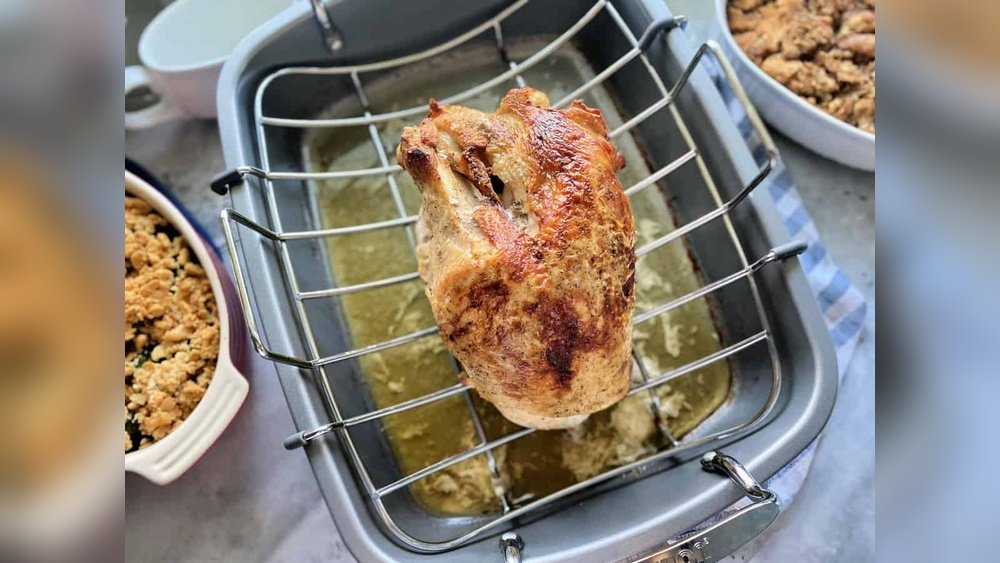
Cooking a turkey with a roasting pan might sound like a big task, but with the right steps, you can make it simple and stress-free. This guide explains How to Cook a Turkey With a Roasting Pan while using proven turkey roasting techniques to help you achieve tender meat and crispy, golden skin. Whether it’s for a holiday feast or a special family dinner, knowing how to use your roasting pan properly will help you achieve a juicy, flavorful turkey with crispy skin.
In this guide, you’ll learn the easy tricks to prepare, season, and roast your bird perfectly. Stick with me, and by the end, you’ll have all the confidence you need to serve a turkey that everyone will be asking for again and again.
Ready to impress your guests with a delicious home-cooked turkey? Let’s get started!
:max_bytes(150000):strip_icc()/ALR-56348-a-simply-perfect-roast-turkey-VAT-4x3-step-06-6fc1ca1ac9c043a8be434e8bf39a6044.jpg)
Credit: www.aspireyouthandfamily.com
Preparing The Turkey
Preparing the turkey is the first step to a delicious roast. It sets the foundation for flavor and even cooking. A well-prepared turkey cooks better and tastes better.
Start with a fully thawed bird. This helps the turkey cook evenly inside and out. Plan ahead to allow enough thawing time in the refrigerator.
Removing The Giblets And Neck
Open the turkey cavity carefully. Remove the bag containing giblets and neck. These parts can be used to make gravy or stock. Rinse the cavity gently with cold water. Pat dry with paper towels to remove moisture.
Trussing The Legs
Trussing means tying the turkey legs together. Use kitchen twine to secure the legs. This helps the bird cook evenly and keeps it looking neat. It prevents the legs from spreading out during roasting.
Washing And Drying The Turkey
Rinse the entire turkey under cold running water. Remove any remaining feathers or residue. Pat the bird dry inside and out with paper towels. Dry skin helps the turkey brown and crisp in the oven.
Applying Butter Or Oil
Rub softened butter or olive oil over the turkey’s skin. This adds flavor and helps the skin crisp. Cover every part of the bird, including under the wings. Butter also keeps the meat moist during cooking.
Tucking The Wings
Tuck the wing tips under the turkey’s body. This prevents them from burning in the oven. It also helps the turkey cook evenly. Keep the wings close to the body for a compact shape.
Positioning The Turkey Breast-side Down
Place the turkey breast-side down in the roasting pan. This protects the breast meat from drying out. It allows the juices to flow through the breast. Turn the turkey breast-side up halfway through cooking.
Removing Giblets And Neck
Seasoning your turkey with compound butter adds deep flavor and moistness. This simple step helps the meat stay juicy and tender during roasting. Compound butter melts slowly, carrying herbs and spices into the turkey skin and meat. It also creates a crispy, golden crust that looks inviting and tastes delicious.
Making your own compound butter is easy and lets you customize flavors. You can mix garlic, rosemary, thyme, lemon zest, or other favorites into softened butter. Then spread it under and over the turkey skin for full coverage. This method infuses the bird with rich, savory notes that enhance the natural taste.
Preparing Compound Butter For Turkey
Start with unsalted butter at room temperature. Add chopped fresh herbs like rosemary and thyme. Include minced garlic for extra aroma. Mix in a pinch of salt and pepper. Optional: add lemon zest for brightness. Blend all ingredients until smooth and creamy.
Applying Compound Butter To The Turkey
Gently loosen the turkey skin from the breast with your fingers. Be careful not to tear the skin. Spread a thick layer of compound butter directly on the meat beneath the skin. Then rub butter all over the outside of the skin. Cover every part for even seasoning and browning.
Tips For Best Results
Use a generous amount of compound butter for rich flavor. Let the turkey rest after applying butter to absorb flavors. Refrigerate the turkey uncovered for a few hours or overnight to dry the skin. This step helps create crisp, golden skin during roasting. Remember to bring the turkey to room temperature before cooking for even heat distribution.
Drying The Skin
Adding aromatics inside the turkey cavity is a simple way to boost its flavor. These ingredients release steam and infuse the meat while roasting. The aroma seeps through the turkey, enhancing taste and moisture.
Choosing the right aromatics creates a fresh, savory smell. Herbs, fruits, and vegetables work well for this purpose. They also help keep the turkey juicy from the inside out.
Choosing Fresh Herbs For The Cavity
Fresh herbs add a bright, natural flavor. Common choices include rosemary, thyme, and sage. Stuff a few sprigs inside the cavity for best results. Their oils release slowly, scenting the meat evenly.
Adding Citrus Fruits For Zesty Flavor
Slice lemons, oranges, or limes to add a citrus note. The fruit’s acidity tenderizes the turkey gently. Place slices inside the cavity to fill it with a subtle, tangy aroma.
Using Aromatic Vegetables
Onions, garlic, and celery add depth and sweetness. Cut them roughly and nestle them inside the turkey. Their flavors mingle with the herbs and citrus, enriching the taste.
Read more: Best Stainless Steel Fry Pan: Honest Review & Top Picks 2026
Combining Aromatics For Best Results
Mix herbs, citrus, and vegetables together. This blend creates complex layers of flavor. Fill the cavity loosely to allow heat and steam circulation.
Preparing The Cavity Before Stuffing
Remove giblets and excess fat from the cavity. Pat the inside dry with paper towels. This step helps the aromatics stay fresh and effective.
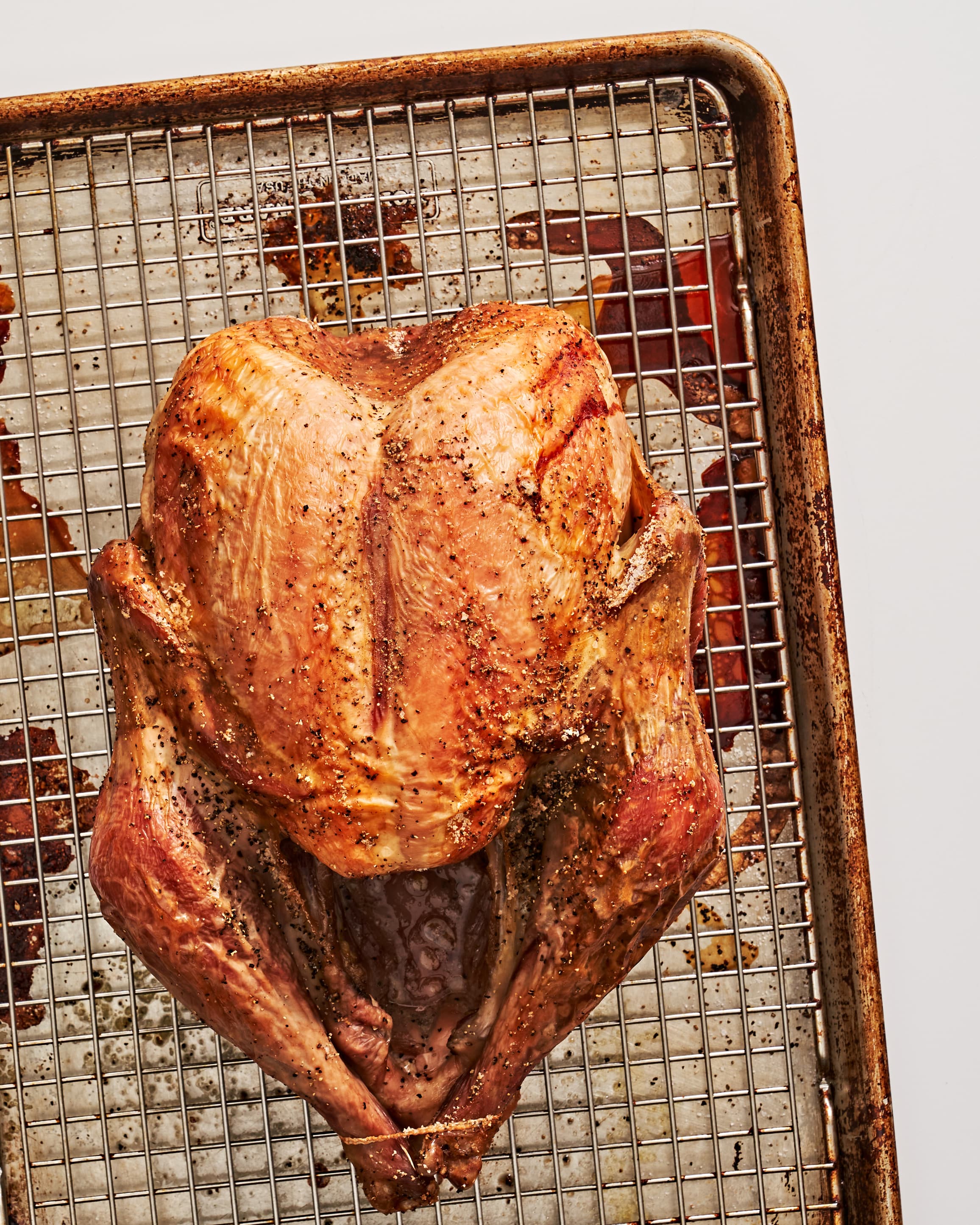
Credit: www.thekitchn.com
Creating A Roasting Rack
Setting the oven temperature correctly is key to cooking a juicy turkey. The right heat cooks the bird evenly. It also helps to get a crispy, golden skin.
Too high a temperature can dry out the meat. Too low, and the turkey might not cook thoroughly. Finding the balance ensures the best results.
Read more: Best Kitchen Sink Faucet With Sprayer: Buyer’s Guide & Review
Choosing The Ideal Oven Temperature
Most recipes suggest roasting a turkey at 325°F. This temperature cooks the turkey slowly. Slow cooking keeps the meat tender and moist. It also allows the skin to brown nicely.
Adjusting Temperature For Turkey Size
Smaller turkeys may cook well at 350°F. Larger birds benefit from 325°F or lower. This prevents the outside from burning. The inside stays juicy and fully cooked.
Using A Roasting Pan Effectively
The roasting pan helps spread heat evenly. Place the turkey breast-side up in the pan. This exposes the breast to direct heat for crisp skin. Keep the oven temperature steady for best results.
Seasoning With Compound Butter
Basting is a simple way to keep your turkey moist and flavorful. It involves spooning or brushing juices over the bird during cooking. These juices help create a golden, crispy skin and add extra taste. Using the right technique can make your turkey juicy and tender.
Basting Tools You Need
Use a large spoon, baster, or brush for basting. A baster is great for drawing up juices from the pan. A spoon works well for pouring liquids over the turkey. A brush can spread butter or oil evenly on the skin. Choose a tool that feels comfortable and easy to handle.
Read more: What is a Dutch Oven: Ultimate Guide to Cooking Magic
How Often To Baste
Baste every 30 to 45 minutes during roasting. Frequent basting keeps the skin moist and helps it brown evenly. Avoid opening the oven too often to keep heat steady. Set a timer to remind yourself when to baste. This simple step improves both flavor and texture.
Best Liquids For Basting
Use pan drippings mixed with melted butter or broth. These liquids add flavor and moisture to the turkey. You can also add herbs or garlic to the basting liquid for extra taste. Avoid using plain water as it may dilute flavor. Keep the basting liquid warm for best results.
Adding Aromatics Inside The Cavity
Aromatics like onions, garlic, and herbs placed inside the turkey’s cavity add flavor and moisture during roasting. They release fragrant steam that seeps into the meat. This simple step enhances the turkey’s taste without extra effort.
Sometimes the turkey skin browns too fast while the meat inside is still cooking. Covering the bird with foil helps stop the skin from burning. This simple step keeps the turkey moist and prevents dryness.
Check the turkey about halfway through cooking. If the skin looks too dark, gently place a loose tent of aluminum foil over it. Make sure the foil does not touch the skin. This lets heat circulate while protecting the turkey.
Read more: How to Use a Slow Cooker: Ultimate Guide for Easy, Tasty Meals
How To Make The Foil Tent
Tear off a large piece of aluminum foil. It should be big enough to cover the whole turkey. Fold the foil in half or thirds for strength. Then, shape it into a tent that sits above the bird without pressing down.
Place the tent carefully on top of the turkey. Avoid covering the pan edges or the roasting rack. The goal is to shield the skin but keep air moving around the meat.
When To Remove The Foil Tent
Remove the foil in the last 30 minutes of cooking. This helps the skin crisp up nicely. Check the turkey often to avoid over-browning after taking off the foil.
Use a meat thermometer to test the turkey’s internal temperature. The turkey is done at 165°F in the thickest part of the breast. Remove the foil tent once the turkey nears this temperature.
Frequently Asked Questions
Do You Add Water To A Roasting Pan When Cooking A Turkey?
Do not add water to the roasting pan; it can cause steaming and prevent crispy skin. Use a roasting rack or vegetables to elevate the turkey.
What Temperature Do You Cook A Turkey At In A Roaster Pan?
Cook turkey in a roaster pan at 325°F (163°C) for even cooking. Use a roasting rack to elevate the bird. Check internal temperature reaches 165°F (74°C) for safety.
Are You Supposed To Put Water In The Bottom Of A Roaster Pan?
Yes, adding water to a roaster pan’s bottom prevents drippings from burning and creates steam for moist turkey. Use a roasting rack to keep the bird elevated.
What Do You Put In The Bottom Of A Roasting Pan For A Turkey?
Place a roasting rack in the pan to elevate the turkey. Alternatively, use chopped vegetables like carrots, celery, and onions as a flavorful base. This prevents sticking and promotes even cooking.
How Do You Prepare A Turkey For Roasting In A Pan?
Start by thawing the turkey completely and removing the giblets. Pat the turkey dry and rub it with butter or oil. Tie the legs together and tuck the wings under for even cooking.
Conclusion
Cooking a turkey with a roasting pan is simple and rewarding. Use fresh ingredients and season well for the best taste. Keep an eye on the temperature to avoid overcooking. Rest the turkey before carving to keep it juicy and tender.
With these easy steps, you can enjoy a delicious turkey meal every time. Happy cooking!
Read more: Best Turkey Roasting Pan: Top Picks for Perfect Holiday Meals