Few rooms are as important as the kitchen. Whether you cook daily or only sometimes, the right tools make every task easier, safer, and more enjoyable. Americans spend about 37 minutes a day cooking, so even small improvements save time and boost results. But with hundreds of gadgets on the market, how do you know which are truly the best kitchen tools? This guide to the Best Kitchen Tools highlights must-have kitchen gadgets that help you cook more efficiently, save time, and choose practical essentials for any home kitchen.
This guide is your trusted roadmap. It covers every must-have tool, from chef knives to food storage containers. You’ll learn what each tool does, how to choose the best version, and which features really matter. If you’re building your kitchen collection or upgrading old gear, this article gives you clear, confident answers. Let’s explore the world of kitchen tools — and discover how to cook smarter.
Chef Knives
A chef knife is the heart of any kitchen. It’s your main cutting tool, used for slicing, chopping, mincing, and dicing. Without a good chef knife, even simple tasks can become frustrating or unsafe.
What Is A Chef Knife?
A chef knife usually has a broad, sharp blade (8–10 inches long). Its curved edge lets you rock the knife for fast chopping. The pointed tip helps with precise tasks like mincing garlic or slicing herbs. The shape is designed to handle everything from cutting meat to chopping vegetables.
For example, if you need to dice onions, the curved blade lets you cut quickly and safely. If you want to slice chicken breast, the length and balance help you make even cuts.
Key Features
- Blade material: Stainless steel, carbon steel, or ceramic. Stainless steel is most common because it resists rust and is easy to maintain. Carbon steel is sharper but needs more care to prevent rust. Ceramic stays sharp for longer but can chip if dropped.
- Handle shape: Ergonomic, non-slip, comfortable for long use. A good handle reduces hand fatigue and helps you grip safely even if your hands are wet.
- Weight and balance: Even weight distribution for control. Heavier knives are better for tough tasks, while lighter knives are easier for fast chopping.
- Edge type: Smooth (for most tasks), or sometimes serrated for tougher foods like bread or tomatoes.
Some chef knives also have full tang (the metal runs through the handle), which adds durability.
Benefits
- Handles most kitchen cutting jobs, from slicing steak to chopping carrots.
- Makes prep faster and safer. A sharp knife cuts cleanly and reduces slipping.
- Lasts for years with proper care. Many chef knives can last a lifetime if you sharpen and store them well.
Ideal Users
Home cooks, professional chefs, and anyone who wants to prep food efficiently. Even if you only cook a few times a week, a chef knife makes the process more enjoyable.
Buying Factors
- Blade quality: Choose high-carbon stainless steel for sharpness and durability. Avoid knives that feel flimsy or have loose handles.
- Handle comfort: Try before you buy; it should feel secure, not slippery. Some handles are made for left or right-handed users.
- Size: 8-inch is most popular, but smaller hands may prefer 6-inch. If you cook large meals, a 10-inch knife can be useful.
- Price: Quality chef knives start around $50; top brands can cost $150+. Avoid very cheap knives—they dull quickly and can be unsafe.
Pros & Cons
Pros:
- Versatile for many tasks. One knife can replace several cheap ones.
- Durable and long-lasting. With sharpening, you can use it for decades.
Cons:
- Needs regular sharpening. Dull knives are dangerous.
- Requires careful handling. The blade is sharp and can cut easily.
Expert Tip
Invest in one good chef knife instead of many cheap ones. A sharp, balanced knife reduces accidents and makes cooking more fun. If you have limited space or budget, start with a chef knife and add more specialized knives later.
Knife Sets
A knife set gives you a range of blades for different jobs — not just a chef knife, but also paring, bread, and utility knives. This is perfect if you want a ready-to-go collection.
What Is A Knife Set?
Knife sets come in blocks or trays. Typical sets include:
- Chef knife
- Paring knife
- Bread knife
- Utility knife
- Carving knife
- Kitchen scissors
Some sets add steak knives or specialty blades like boning knives. The block keeps everything organized and safe.
Key Features
- Variety: Multiple blade types for specific tasks. Paring knife for peeling, bread knife for slicing loaves, carving knife for meat.
- Block or tray: Safe storage, keeps knives sharp. Wood blocks are common, but some sets use magnetic strips.
- Matching design: Blades and handles look unified. This helps your kitchen look tidy and professional.
A good set will offer tools for every prep step, so you’re ready for anything.
Benefits
- Ready for every cutting task. You don’t need to buy knives one by one.
- Saves money compared to buying separately. Sets are often discounted.
- Organized storage. Blocks protect blades and prevent accidents.
Ideal Users
Families, new homeowners, anyone who wants a complete kit. If you cook for several people or try new recipes often, a set is useful.
Buying Factors
- Blade materials: Stainless steel holds edge well. Avoid sets with plastic blades.
- Number of knives: 5–8 is standard; more isn’t always better. Focus on quality over quantity.
- Extras: Scissors, sharpener, steak knives. Check if these are included.
- Price: Sets start at $40; premium sets $200+. Higher prices usually mean better steel and construction.
Pros & Cons
Pros:
- All-in-one solution. You get everything you need at once.
- Good value for beginners. Easier than shopping for individual knives.
Cons:
- Quality varies among included knives. Sometimes the chef knife is great, but others are weak.
- Block takes counter space. If you have a small kitchen, this can be an issue.
Comparison Table: Chef Knife Vs Knife Set
| Feature | Chef Knife | Knife Set |
|---|---|---|
| Versatility | High | Varies (many tasks) |
| Cost | $50-$150 | $40-$250 |
| Storage | Needs protection | Usually block/tray |
| Quality | Focused | May vary |
Expert Tip
If you already own a chef knife, look for sets that fill in missing pieces (like bread or paring knives). Avoid sets with too many steak knives unless you regularly host guests.
👉 Read our full guide on the Top 10 Best Kitchen Knife Sets
Cutting Boards
A cutting board protects your counters and your knives. It’s also crucial for kitchen hygiene.
What Is A Cutting Board?
It’s a flat surface (usually wood, plastic, or bamboo) for chopping, slicing, and prepping food. Cutting boards also help contain mess and make cleanup easier.
A cutting board can also serve as a temporary tray for moving food from prep area to stove.
Key Features
- Material: Wood, bamboo, plastic, glass. Each has pros and cons for durability and safety.
- Size: Standard is 12 x 18 inches, but small boards are good for quick jobs.
- Non-slip feet: Prevents sliding. Rubber feet or grips are important for safety.
- Juice groove: Catches liquids from meat or fruit. Prevents spills and mess.
Some boards have color coding to reduce cross-contamination (red for meat, green for vegetables).
Benefits
- Prevents knife damage. Hard surfaces dull blades quickly; soft boards protect them.
- Keeps prep area clean. Chopping directly on counters can cause stains and scratches.
- Reduces cross-contamination. Separate boards for meat and produce lower food poisoning risk.
Ideal Users
Everyone who cooks at home. Even if you only make sandwiches, a board protects your counter.
Buying Factors
- Material: Wood is gentle on knives; plastic is dishwasher-safe. Bamboo is eco-friendly but can be harder.
- Thickness: Thicker boards last longer, don’t warp. Thin boards may bend over time.
- Maintenance: Wood needs oiling; plastic is low-maintenance. Glass boards are easy to clean but bad for knives.
Some boards have handles for easier carrying.
Pros & Cons
Pros:
- Essential for kitchen hygiene. Helps keep food safe.
- Multiple sizes for different tasks. Small boards for fruit, large for meat.
Cons:
- Wood requires care. Must be oiled and never soaked.
- Glass can dull knives. Not recommended for heavy use.
Comparison Table: Cutting Board Materials
| Material | Pros | Cons |
|---|---|---|
| Wood | Gentle, attractive, durable | Needs oiling, not dishwasher-safe |
| Plastic | Easy to clean, affordable | Can scar, less durable |
| Bamboo | Eco-friendly, hard | Can be brittle |
| Glass | Easy to clean | Dulls knives, slippery |
Expert Tip
Have at least two boards: one for raw meat, one for fruits and veggies. This prevents cross-contamination. Many people forget this and risk foodborne illness.
Non-obvious insight: Avoid cutting boards with deep grooves or cracks. Bacteria can hide there, making cleaning harder.
👉 Read our full guide on the Best Cutting Board For Meat
👉 Read our full guide on the How To Clean Wood Cutting Board
👉 Read our full guide on the How To Make A Cutting Board
Measuring Cups
Measuring cups are essential for baking and accurate cooking. Even experienced cooks rely on them for consistency.
What Are Measuring Cups?
They’re containers marked with volume lines (1 cup, ½ cup, etc. ). Used for dry and liquid ingredients. Baking especially requires precision, so measuring cups are vital.
Some recipes call for “packed” cups (like brown sugar), so having the right tool helps avoid mistakes.
Key Features
- Material: Plastic, glass, stainless steel. Glass cups are best for liquids; stainless steel for dry goods.
- Clear markings: Easy to read. Faded markings cause errors.
- Nested design: Stack for storage. Saves space in drawers.
Some measuring cups have pour spouts for liquids.
Benefits
- Precise recipes. You can repeat dishes exactly.
- Consistent results. No guessing—every batch turns out the same.
- Saves time. Measuring is faster than estimating.
Ideal Users
Bakers, home cooks, anyone who follows recipes. Even simple dishes like rice or pasta benefit from measuring.
Buying Factors
- Material: Stainless steel lasts longest; glass is good for liquids. Plastic is light but can warp.
- Markings: Shouldn’t fade. Etched or engraved markings last longer than printed.
- Handle comfort: For easy pouring and grip.
Some sets include both dry and liquid cups.
Pros & Cons
Pros:
- Essential for baking. Without measuring, cakes and cookies can fail.
- Easy to use. Even kids can measure ingredients.
Cons:
- Sets can lose pieces. Small cups are easy to misplace.
- Plastic may warp. Avoid washing in hot water.
Expert Tip
Buy a set with both dry and liquid cups. Liquid measuring cups usually have a spout. Many beginners don’t realize the difference—liquid cups are designed for easy pouring, dry cups for scooping.
Non-obvious insight: Glass cups let you heat liquids in the microwave, saving steps in recipes.
👉 Read our full guide on the Best Measuring Cups Spoons
👉 Read our full guide on the How Can You Measure 34 Cup
Measuring Spoons
Measuring spoons help measure small amounts (teaspoons, tablespoons). Essential for spices and baking powder.
What Are Measuring Spoons?
Small spoons marked with volume (1 tbsp, 1 tsp, ½ tsp, etc. ). Used for spices, baking powder, extracts. Inaccurate measuring can ruin a recipe.
Key Features
- Material: Stainless steel, plastic. Stainless steel is best for durability.
- Ring or chain: Keeps set together. Easy to store and prevents loss.
- Flat bottom: Sits level for accurate measuring. Ensures you don’t spill.
Some sets include odd sizes like ⅛ teaspoon.
Benefits
- Accurate recipes. Spices and leaveners must be measured precisely.
- Saves time. No guessing or searching for the right size.
- Prevents mistakes. Too much salt or baking powder can ruin food.
Ideal Users
Bakers, anyone who cooks with spices. Even simple recipes like salad dressings benefit from proper measuring.
Buying Factors
- Material: Stainless steel doesn’t bend. Avoid flimsy plastic.
- Number of spoons: Look for 6–8 piece sets. Covers all common sizes.
- Markings: Should be etched, not printed. Printed markings fade quickly.
Pros & Cons
Pros:
- Precise. Ensures correct ratios.
- Easy to clean. Most are dishwasher-safe.
Cons:
- Easy to lose pieces. Keep them together with a ring.
- Plastic may crack. Stainless steel lasts longer.
Expert Tip
Choose spoons with narrow heads for spice jars. This avoids spills. Many people buy wide spoons that don’t fit into jars, causing mess and waste.
Non-obvious insight: Flat-bottomed spoons let you set them down without spilling, helpful when you need to measure multiple ingredients.
👉 Read our full guide on the Best Measuring Cups Spoons
Mixing Bowls
Mixing bowls are used for combining ingredients, marinating, and serving. They are central for baking, salads, and even prepping meats.
What Are Mixing Bowls?
Deep bowls made of glass, stainless steel, or plastic. Used for stirring, mixing, tossing salads. Sometimes used for storage or proofing dough.
Key Features
- Material: Stainless steel, glass, plastic. Stainless steel is light and durable; glass is heavy and microwave-safe.
- Sizes: Sets usually include 3–5 bowls. Small for dressings, large for bread dough.
- Non-slip base: Keeps bowl steady. Some have rubber bottoms.
Some bowls have lids, useful for storing leftovers.
Benefits
- Handles any mixing task. From cake batter to salad.
- Stackable for storage. Saves cabinet space.
- Can double as serving bowls. Glass bowls look nice at the table.
Ideal Users
Home cooks, bakers, salad lovers. If you enjoy baking or prepping large meals, multiple bowls help.
Buying Factors
- Material: Stainless steel is durable; glass is microwave-safe. Plastic is light but may absorb smells.
- Size range: Small to large. Choose sets with a variety.
- Nesting: Saves space. Look for bowls that fit inside each other.
Some bowls have pouring spouts or measurement marks.
Pros & Cons
Pros:
- Versatile. Used for mixing, serving, or storage.
- Easy to clean. Most are dishwasher-safe.
Cons:
- Glass can break. Handle carefully.
- Plastic may absorb odors. Avoid storing strong-smelling foods.
Expert Tip
Stainless steel bowls stay cool, ideal for whipping cream or dough. They are also lighter and easier to handle than glass.
Non-obvious insight: If you bake bread, a large bowl is essential for dough rising. Many beginners buy only small bowls and struggle with big recipes.
👉 Read our full guide on the Best Stainless Steel Mixing Bowls
Vegetable Choppers
A vegetable chopper speeds up prep and keeps cuts uniform. It’s perfect for salads, soups, and stir-fries.
What Is A Vegetable Chopper?
A device with blades that cuts veggies into cubes, slices, or sticks. Some are manual (push or twist), others are electric. Manual choppers require force, while electric ones are fast and easy.
Key Features
- Blade options: Dice, slice, julienne. Some models include multiple blade inserts.
- Container: Catches chopped veggies. Prevents mess and saves time.
- Easy cleaning: Removable blades. Dishwasher-safe is best.
Some choppers include attachments for shredding or spiralizing.
Benefits
- Saves time. Prep is much faster than using a knife.
- Consistent shapes. Uniform cuts cook evenly.
- Reduces knife work. Good for people who struggle with knife skills.
Ideal Users
Busy families, meal preppers, those who dislike chopping. Also helpful for people with arthritis or weak hands.
Buying Factors
- Capacity: Large enough for family meals. Small choppers are good for single portions.
- Blade types: Multiple options for flexibility. Look for models with easy blade changes.
- Ease of cleaning: Dishwasher-safe is best. Some blades can be hard to clean by hand.
Some choppers have safety locks or storage cases.
Pros & Cons
Pros:
- Fast. Cuts prep time in half.
- Uniform cuts. Food cooks evenly.
Cons:
- Can be bulky. Takes counter space.
- Blades need care. Must be kept sharp and clean.
Expert Tip
Manual choppers are safer for kids to help with cooking. Electric choppers can be noisy and require power.
Non-obvious insight: Choppers are great for prepping large batches. If you meal prep or cook for parties, they save hours.
👉 Read our full guide on the MIU Vegetable Chopper Review
Mandoline Slicers
A mandoline slicer creates even slices quickly and safely. Great for chips, salads, and stir-fries.
What Is A Mandoline Slicer?
A flat tool with adjustable blades. You slide veggies across the surface for slices, julienne, or waffle cuts. Mandolines can make paper-thin slices or thick fries.
Key Features
- Adjustable thickness: Change slice size. Lets you customize for different recipes.
- Multiple blades: For different cuts. Some mandolines include julienne or crinkle blades.
- Hand guard: Protects fingers. Essential for safety.
Some mandolines fold for storage or have storage cases for blades.
Benefits
- Perfect, uniform slices. Professional-looking salads and chips.
- Fast prep. Slices dozens of pieces in seconds.
- Makes chips, fries, salads. Ideal for homemade snacks.
Ideal Users
Home cooks, salad lovers, anyone who wants pro-looking slices. Especially useful for making gratins, stir-fries, or fruit platters.
Buying Factors
- Safety: Look for a sturdy hand guard. Avoid models without finger protection.
- Blade quality: Stainless steel lasts longer. Cheap blades dull quickly.
- Cleaning: Easy to disassemble. Some models are dishwasher-safe.
Mandolines can be dangerous if used carelessly. Always follow safety instructions.
Pros & Cons
Pros:
- Quick, precise slices. Saves time on prep.
- Versatile. Makes many types of cuts.
Cons:
- Blades are sharp—care needed. Risk of injury.
- Can be tricky to clean. Small parts need attention.
Comparison Table: Mandoline Slicer Vs Vegetable Chopper
| Feature | Mandoline Slicer | Vegetable Chopper |
|---|---|---|
| Slice Thickness | Adjustable | Fixed |
| Types of Cuts | Slices, julienne, waffle | Dice, slice, sticks |
| Safety | Needs guard | Safer |
| Speed | Very fast | Fast |
Expert Tip
Always use the finger guard with mandolines to avoid accidents. Many beginners ignore this and suffer deep cuts.
Non-obvious insight: Mandolines are great for prepping large batches of vegetables. If you cook for crowds, this tool is a lifesaver.
Peelers
Peelers remove skins from veggies and fruit. Peeling with a knife is dangerous and wastes food.
What Is A Peeler?
A small tool with a sharp blade and handle. Used for potatoes, carrots, apples. Peelers make thin, even strips.
Key Features
- Blade type: Straight, Y-shaped, or serrated. Y-shaped is easier for beginners.
- Comfort grip: Reduces hand fatigue. Some handles are padded.
- Stainless steel blades: Stay sharp and resist rust.
Some peelers include built-in potato eye removers.
Benefits
- Fast, smooth peeling. Saves time and reduces waste.
- Prevents waste. Removes only skin, not flesh.
- Safer than knives. Reduces injury risk.
Ideal Users
Anyone who cooks with fresh produce. Also helpful for prepping fruit for kids.
Buying Factors
- Blade style: Y-peelers are easier for beginners. Straight peelers are good for long vegetables.
- Handle comfort: Non-slip is best. Avoid hard plastic.
- Easy cleaning: Dishwasher-safe preferred.
Some peelers have swivel blades for easier movement.
Pros & Cons
Pros:
- Quick. Speeds up prep.
- Accurate. Even strips.
Cons:
- Blades can dull. Replace when necessary.
- Cheap peelers break. Avoid flimsy models.
Expert Tip
Serrated peelers work well on soft-skinned fruits like tomatoes. Most people don’t realize how hard it is to peel soft fruit with standard peelers.
Non-obvious insight: Peelers are also great for making vegetable ribbons (for salads or garnishes).
Graters
A grater shreds cheese, veggies, citrus zest, and more. Adds texture to dishes and saves money.
What Is A Grater?
A metal surface with sharp holes or blades. You rub food against it to shred. Box graters offer multiple options (fine, coarse, slicing).
Key Features
- Types: Box grater (multi-sided), microplane, flat grater. Microplanes are best for zest and spices.
- Hole sizes: Fine for zest, large for cheese.
- Handle: Comfortable, stable. Some handles are rubber-coated.
Some graters have non-slip bases for stability.
Benefits
- Versatile: Cheese, veggies, citrus, ginger. Use for salads, baking, or garnishes.
- Saves money: Buy block cheese, grate as needed. Pre-grated cheese is more expensive.
- Adds texture to dishes. Shredded carrots, grated chocolate, or citrus zest.
Ideal Users
Home cooks, bakers, salad lovers. Essential for recipes that need shredded ingredients.
Buying Factors
- Type: Box graters are most versatile. Flat graters are easy to store.
- Material: Stainless steel lasts longer. Plastic wears out fast.
- Ease of cleaning: Dishwasher-safe helps. Some graters have removable panels.
Microplane graters are good for hard cheese and nutmeg.
Pros & Cons
Pros:
- Multi-use. Covers many recipes.
- Saves money. Cheaper than buying pre-shredded foods.
Cons:
- Can be hard to clean. Food sticks in holes.
- Risk of scraped knuckles. Use a food holder.
Expert Tip
Microplane graters are best for zesting citrus and grating nutmeg. Most beginners don’t own one, but it adds flavor and aroma to dishes.
Non-obvious insight: Graters are perfect for garlic and ginger. Use the fine side for pastes.
👉 Read our full guide on the Can You Freeze Grated Cheese
Can Openers
A can opener opens canned food quickly and safely. Essential for soups, beans, and sauces.
What Is A Can Opener?
Manual or electric tool that cuts lids off cans. Manual openers use a twist handle; electric openers are push-button.
Key Features
- Type: Manual (twist), electric (push-button). Manual is more reliable.
- Comfort grip: Easier to hold. Reduces wrist strain.
- Smooth-edge: Prevents sharp lid. Some openers cut inside the rim.
Some openers include bottle openers.
Benefits
- Opens cans safely. No risk of sharp edges.
- No risk of metal shards in food. Clean cuts.
- Easy for all ages. Electric models help elderly or disabled users.
Ideal Users
Everyone who uses canned food. Essential for quick meals.
Buying Factors
- Manual: Cheaper, reliable. Good for emergencies.
- Electric: Easier for arthritis or weak hands. Requires power.
- Safety: Smooth edge is best. Avoid models that leave sharp lids.
Some models are compact for travel.
Pros & Cons
Pros:
- Easy to use. Simple and fast.
- Reliable. Manual models last years.
Cons:
- Electric can openers need power. Not useful in outages.
- Cheap models jam. Avoid flimsy designs.
Expert Tip
Manual can openers last longer and are easier to store. Electric models can break or lose power.
Non-obvious insight: Side-cut openers are safer for kids. They cut below the rim and don’t leave sharp edges.
👉 Read our full guide on the How To Use A Manual Can Opener
Kitchen Scissors
Kitchen scissors (shears) cut herbs, open packages, trim meat, and more. More versatile than regular scissors.
What Are Kitchen Scissors?
Heavy-duty scissors designed for food, not paper. Often have extra features like bottle openers or nutcrackers.
Key Features
- Sharp blades: Cut through poultry, herbs. Good for tough meats.
- Ergonomic handles: Comfortable for long use. Soft grips prevent blisters.
- Disassembly: Easy cleaning. Some models come apart for washing.
Some shears have built-in bone notch or fish scaler.
Benefits
- Multi-purpose. Cuts meat, veggies, pizza.
- Safer than knives for some tasks. Kids can use for herbs or dough.
- Cuts bones, pizza, dough. Useful for prepping chicken or portioning pizza.
Ideal Users
Home cooks, gardeners, meal preppers. Essential for trimming poultry or snipping herbs.
Buying Factors
- Blade quality: Stainless steel preferred. Avoid plastic blades.
- Comfort: Soft grips reduce fatigue. Large handles for big hands.
- Extras: Built-in tools. Some have bottle opener or nutcracker.
Some shears are dishwasher-safe.
Pros & Cons
Pros:
- Versatile. Many uses.
- Easy to clean. Most models come apart.
Cons:
- Blades dull over time. Sharpen or replace.
- Cheap models rust. Avoid low-quality steel.
Expert Tip
Wash scissors after cutting meat to prevent bacteria. Many people forget and risk illness.
Non-obvious insight: Kitchen scissors can be used to cut pizza, quesadillas, or even herbs over the pot.
Tongs
Tongs grip, turn, and serve hot food. Safer than forks or spoons for grilling and frying.
What Are Tongs?
Two arms joined at one end. Used for flipping meat, serving salad, picking up pasta. Tongs give control and prevent burns.
Key Features
- Length: 9–12 inches is standard. Long tongs for grilling, short for serving.
- Locking mechanism: For storage. Saves drawer space.
- Silicone tips: Safe for nonstick pans. Won’t scratch.
Some tongs have hanging loops.
Benefits
- Protects hands from heat. Essential for grilling or frying.
- Precise grip. Picks up delicate or slippery food.
- Keeps food clean. No touching with hands.
Ideal Users
Grillers, home cooks, bakers. Useful for serving salads or pasta.
Buying Factors
- Material: Stainless steel is strongest. Silicone tips prevent scratches.
- Tips: Silicone won’t scratch pans. Metal for grilling.
- Locking: Easy storage. Locks keep tongs closed.
Some tongs are dishwasher-safe.
Pros & Cons
Pros:
- Safe. Prevents burns.
- Versatile. Use for cooking and serving.
Cons:
- Metal tongs can scratch pans. Use silicone tips for nonstick.
- Cheap models bend. Avoid flimsy tongs.
Expert Tip
Use long tongs for grilling; short tongs for serving. Many people use the wrong length and risk burns.
Non-obvious insight: Tongs are perfect for tossing salads—better grip and less bruising than forks.
Spatulas
A spatula flips, stirs, and scrapes food. Essential for pancakes, eggs, and sauces.
What Is A Spatula?
Flat blade with a handle. Used for pancakes, eggs, stirring sauces. Also used to scrape bowls or lift cookies.
Key Features
- Type: Turner (for flipping), scraper (for mixing). Turner spatulas are thin and flexible.
- Material: Silicone, metal, plastic. Silicone is safe for all cookware.
- Heat resistance: Won’t melt. Needed for stovetop use.
Some spatulas have holes for draining grease.
Benefits
- Prevents food from sticking. Useful for nonstick pans.
- Scrapes bowls clean. Reduces waste.
- Flips food gently. No breaking or tearing.
Ideal Users
Bakers, home cooks, grillers. Anyone who cooks eggs, pancakes, or stir-fries.
Buying Factors
- Material: Silicone is safe for all pans. Metal for grilling.
- Shape: Thin edge for flipping, rounded for scraping. Some spatulas are angled for easier lifting.
- Heat resistance: Needed for hot pans. Avoid cheap plastics.
Some spatulas are dishwasher-safe.
Pros & Cons
Pros:
- Versatile. Used for many tasks.
- Gentle. Won’t damage pans.
Cons:
- Metal spatulas can scratch pans. Use silicone for delicate surfaces.
- Cheap silicone can melt. Avoid low-quality tools.
Expert Tip
Silicone spatulas are ideal for nonstick cookware. They bend easily and won’t scratch.
Non-obvious insight: Use a scraper spatula to clean out jars—reduces food waste.
Whisks
A whisk blends, whips, and aerates food. Adds air for fluffy eggs and smooth sauces.
What Is A Whisk?
Wire loops attached to a handle. Used for eggs, sauces, cream. Whisks mix fast and prevent lumps.
Key Features
- Shape: Balloon (for whipping), flat (for sauces). Balloon whisks add air; flat whisks stir in pans.
- Material: Stainless steel, silicone. Silicone is safe for nonstick pans.
- Handle: Comfortable, non-slip. Some handles are weighted for balance.
Some whisks have colored silicone wires.
Benefits
- Adds air for fluffy results. Perfect for omelets and whipped cream.
- Blends ingredients smoothly. No lumps in sauces.
- Prevents lumps. Essential for batters and custards.
Ideal Users
Bakers, home cooks, anyone who makes sauces. Great for dressings, eggs, or baking.
Buying Factors
- Shape: Balloon for eggs, flat for pan sauces. Some whisks are mini for small bowls.
- Material: Stainless steel lasts longer. Silicone wires for nonstick pans.
- Size: Small for dressings, large for batters. Sets cover all needs.
Some whisks are dishwasher-safe.
Pros & Cons
Pros:
- Fast blending. Saves time.
- Lightweight. Easy to use.
Cons:
- Metal whisks can scratch pans. Use silicone for nonstick.
- Hard to clean. Food sticks in wires.
Expert Tip
Silicone-coated whisks are safe for nonstick pans. Most beginners use metal and ruin their pans.
Non-obvious insight: Flat whisks are best for stirring sauces in shallow pans—they reach corners easily.
Colanders
A colander drains pasta, rinses veggies, and strains liquids. Prevents soggy food and speeds up prep.
What Is A Colander?
Bowl-shaped tool with holes. Used for draining water from foods. Essential for pasta, beans, and fruit.
Key Features
- Material: Stainless steel, plastic, silicone. Stainless steel is most durable.
- Size: Large for pasta, small for berries. Choose based on your recipes.
- Feet or base: Keeps food off sink bottom. Prevents contamination.
Some colanders are collapsible for storage.
Benefits
- Drains quickly. No waiting for water to escape.
- Prevents soggy food. Keeps pasta or veggies fresh.
- Multi-use (pasta, produce). Also for rinsing grains.
Ideal Users
Pasta lovers, salad makers, home cooks. Essential for washing fruits and veggies.
Buying Factors
- Material: Stainless steel is durable. Plastic is light but may warp.
- Size: Match to your usual portion size. Small colanders for berries, large for pasta.
- Easy cleaning: Dishwasher-safe is best. Some models have removable bases.
Some colanders have handles for easier carrying.
Pros & Cons
Pros:
- Fast draining. No soggy food.
- Versatile. Use for many foods.
Cons:
- Plastic can warp. Avoid hot water.
- Cheap models break. Invest in sturdy designs.
Expert Tip
Collapsible colanders save space in small kitchens. Most beginners don’t realize how much space a large colander takes.
Non-obvious insight: Use colanders for rinsing beans or draining canned vegetables.
👉 Read our full guide on the What Is A Colander Used For

Credit: www.amazon.com
Strainers
Strainers filter out solids, catch seeds, or remove lumps. Essential for sauces, teas, and baking.
What Is A Strainer?
Fine mesh basket or screen. Used for sifting flour, straining sauces, rinsing grains. Mesh size varies for different tasks.
Key Features
- Mesh size: Fine for liquids, coarse for pasta. Fine mesh for dusting sugar or straining tea.
- Handle: Long, comfortable. Some models have two handles.
- Hook or lip: Sits on bowl. Makes draining easier.
Some strainers come in sets for different sizes.
Benefits
- Filters out unwanted bits. No seeds or lumps.
- Prevents lumps in sauces. Essential for smooth texture.
- Multi-use. Sifting, draining, rinsing.
Ideal Users
Bakers, home cooks, tea drinkers. Useful for pasta, grains, and sauces.
Buying Factors
- Mesh quality: Stainless steel is best. Avoid thin, bendable mesh.
- Size: Match to your usual tasks. Small for tea, large for pasta.
- Handle: Strong, comfortable. Some models have heat-resistant handles.
Some strainers are dishwasher-safe.
Pros & Cons
Pros:
- Precise filtering. Smooth sauces and soups.
- Easy to use. Simple design.
Cons:
- Hard to clean. Food sticks in mesh.
- Cheap mesh bends. Invest in sturdy models.
Expert Tip
Use a strainer to rinse quinoa — its small grains slip through colanders. Most beginners use colanders and lose grains.
Non-obvious insight: Strainers are perfect for dusting baked goods with sugar or cocoa.
Rolling Pins
A rolling pin flattens dough for baking. Needed for cookies, pizza, pasta, and pie.
What Is A Rolling Pin?
A cylinder, usually wood or silicone, used to roll out dough for cookies, pie, pizza. French pins are tapered, classic pins have handles.
Key Features
- Type: Classic (handles), French (tapered), silicone. French pins are lighter, easier to control.
- Weight: Heavier pins make rolling easier. Light pins require more effort.
- Non-stick surface: Prevents sticking. Silicone or smooth wood is best.
Some pins have engraved designs for decorative cookies.
Benefits
- Even dough thickness. Prevents burnt or undercooked spots.
- Makes baking easier. Dough is easier to shape.
- Versatile: Pasta, cookies, pizza. Also for crushing crackers or nuts.
Ideal Users
Bakers, pizza lovers, pastry fans. Essential for homemade baked goods.
Buying Factors
- Type: French pins are easier for beginners. Handles make classic pins better for heavy dough.
- Material: Wood is classic; silicone is easy to clean. Marble pins are heavy and stay cool.
- Weight: Heavier for tougher doughs. Light pins for delicate pastries.
Some pins are dishwasher-safe.
Pros & Cons
Pros:
- Consistent results. Even thickness.
- Easy to use. Simple design.
Cons:
- Wood needs care. Oil regularly.
- Heavy pins can tire hands. Choose based on your strength.
Expert Tip
Dust rolling pin with flour to prevent sticking. Beginners often forget this and tear dough.
Non-obvious insight: Rolling pins can be used for crushing ice or nuts in a pinch.
Meat Thermometers
A meat thermometer ensures perfect doneness and food safety. Prevents overcooking and food poisoning.
What Is A Meat Thermometer?
A probe measures internal temperature of meat, poultry, fish. Essential for grilling and roasting.
Key Features
- Type: Digital, analog, instant-read. Digital is fastest and most accurate.
- Temperature range: 32–392°F is standard. Some models cover wider ranges.
- Display: Easy to read. Backlit screens help in low light.
Some thermometers have alarms for desired temperature.
Benefits
- Safe, accurate cooking. Prevents raw or dry meat.
- Prevents over- or undercooking. Perfect results every time.
- Essential for grilling. Also useful for baking bread.
Ideal Users
Grillers, bakers, anyone who cooks meat. Families benefit from safety.
Buying Factors
- Type: Instant-read is fastest. Leave-in for roasting.
- Accuracy: Digital is more precise. Analog is slower.
- Probe length: Longer for big roasts. Short for steaks.
Some thermometers are waterproof.
Pros & Cons
Pros:
- Prevents illness. Safe cooking.
- Ensures tasty results. No dry or raw meat.
Cons:
- Needs batteries (digital). Keep extras.
- Cheap models can be inaccurate. Check reviews.
Expert Tip
Test thermometer in ice water (should read 32°F) to check accuracy. Many beginners skip this and get false readings.
Non-obvious insight: Use thermometer for bread or cakes—perfect doneness.
👉 Read our full guide on the Best Wireless Meat Thermometer
👉 Read our full guide on the How To Choose A Set Of Kitchen Utensils
👉 Read our full guide on the How To Use A Meat Thermometer
Garlic Presses
A garlic press crushes cloves quickly and evenly. Adds flavor to dishes without sticky hands.
What Is A Garlic Press?
A device with a chamber and pressing mechanism. Squeezes garlic through small holes. Also works for ginger.
Key Features
- Material: Stainless steel, plastic. Stainless steel is best for durability.
- Easy cleaning: Removable parts. Some models come apart for washing.
- Comfort grip: For easy squeezing. Padded handles reduce strain.
Some presses include a cleaning tool.
Benefits
- Saves time. No chopping needed.
- Even garlic texture. Perfect for sauces and dressings.
- No sticky hands. Presses clove with skin on.
Ideal Users
Garlic lovers, home cooks, meal preppers. Essential for recipes with lots of garlic.
Buying Factors
- Material: Stainless steel lasts longer. Plastic can break.
- Chamber size: Fits multiple cloves. Small presses require more batches.
- Cleaning: Dishwasher-safe is best. Some presses are hard to clean by hand.
Some models are compact for storage.
Pros & Cons
Pros:
- Fast. No chopping.
- Consistent results. Even texture.
Cons:
- Can be hard to clean. Bits stick in holes.
- Cheap models break. Invest in quality.
Expert Tip
Press unpeeled cloves; skin stays behind in the chamber. Saves time and keeps hands clean.
Non-obvious insight: Garlic presses can be used for ginger or shallots.
👉 Read our full guide on the How To Use A Garlic Press
Kitchen Utensil Sets
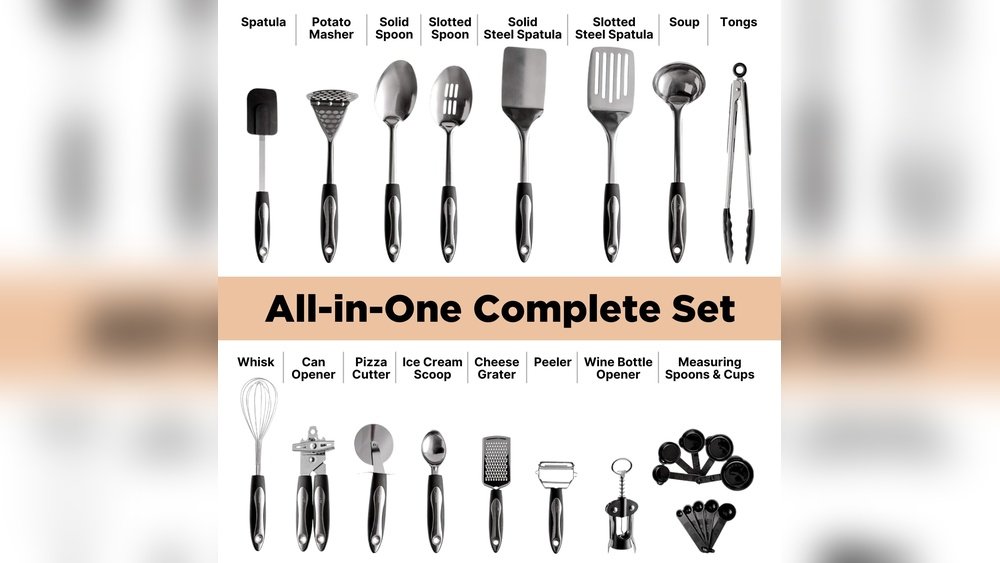
A utensil set covers stirring, flipping, serving, and mixing. Great for new kitchens.
What Is A Kitchen Utensil Set?
Multiple tools — spatulas, ladles, whisks, tongs — matched for style and function. Usually comes with a holder.
Key Features
- Number of tools: 5–10 is common. Covers all basic needs.
- Material: Silicone, stainless steel, wood. Silicone is safe for all cookware.
- Storage: Holder or tray. Keeps tools organized.
Some sets include measuring cups or spoons.
Benefits
- Covers all basic tasks. No need to shop one by one.
- Matches your kitchen style. Unified look.
- Saves money vs buying separately. Good for beginners.
Ideal Users
New homeowners, families, anyone starting a kitchen. Also for students in dorms.
Buying Factors
- Material: Silicone is safe for all cookware. Stainless for durability.
- Tool variety: Should include spatula, spoon, ladle, whisk, tongs.
- Storage: Holder keeps tools organized. Some sets have wall mounts.
Some sets are dishwasher-safe.
Pros & Cons
Pros:
- Complete set. All basics covered.
- Good value. Cheaper than buying separately.
Cons:
- Quality may vary by tool. Some tools better than others.
- Holder takes space. Choose based on kitchen size.
Expert Tip
Choose sets with heat-resistant tools for stovetop use. Cheap plastics melt and ruin pans.
Non-obvious insight: Sets with extra tools (like potato masher or peeler) cover more recipes.
Salad Spinners
A salad spinner dries greens quickly and evenly. Essential for crisp salads.
What Is A Salad Spinner?
A bowl with a spinning basket. Uses centrifugal force to remove water from lettuce, herbs, berries. Makes salads crunchier.
Key Features
- Spin mechanism: Pull cord, push button, or crank. Cord is fastest.
- Capacity: Standard is 4–5 quarts. Large for families.
- Easy cleaning: Removable parts. Some baskets double as colanders.
Some spinners are collapsible.
Benefits
- Crisp, dry greens. No soggy salads.
- Saves time. Dries greens in seconds.
- Reduces waste. Wet greens spoil faster.
Ideal Users
Salad lovers, gardeners, families. Essential for meal prep.
Buying Factors
- Spin mechanism: Cord is fastest. Crank is easier for kids.
- Capacity: Match to family size. Small for single servings.
- Storage: Some collapse for space. Useful in small kitchens.
Some spinners are dishwasher-safe.
Pros & Cons
Pros:
- Fast drying. Saves time.
- Easy to use. Simple design.
Cons:
- Takes counter space. Store when not in use.
- Cheap models break. Invest in sturdy spinner.
Expert Tip
Use spinner basket as a colander for rinsing greens. Saves steps.
Non-obvious insight: Salad spinners can be used to dry herbs or berries before freezing.
👉 Read our full guide on the Best Rated Salad Spinner.
Food Storage Containers
Food storage containers keep leftovers fresh and organized. Essential for meal prep and reducing waste.
What Are Food Storage Containers?
Boxes or bowls with tight lids. Used for storing cooked food, meal prep, pantry ingredients. Glass and plastic are most common.
Key Features
- Material: Glass, plastic, stainless steel. Glass is best for microwaving.
- Lid seal: Leak-proof. Silicone seals are most reliable.
- Stackable: Saves space. Some sets nest for easy storage.
Some containers are freezer-safe.
Benefits
- Reduces waste. No spoiled leftovers.
- Saves money. Store extra food for later.
- Keeps food safe. Prevents contamination and spills.
Ideal Users
Families, meal preppers, anyone who stores food. Also for students and office workers.
Buying Factors
- Material: Glass is microwave-safe, doesn’t absorb odors. Plastic is lighter but can stain.
- Lid seal: Silicone is leak-proof. Avoid snap-on lids that pop open.
- Set size: Match to your usage. Large sets for meal prep.
Some containers have built-in vents for microwaving.
Pros & Cons
Pros:
- Keeps food fresh. Airtight seals.
- Easy to organize. Stackable designs.
Cons:
- Plastic can warp. Avoid hot water.
- Cheap lids leak. Invest in quality.
Comparison Table: Glass Vs Plastic Food Containers
| Feature | Glass | Plastic |
|---|---|---|
| Durability | High | Medium |
| Microwave Safe | Yes | Usually |
| Odor Resistance | Poor | |
| Weight | Heavy | Light |
Expert Tip
Glass containers last longer and don’t stain or absorb smells. Many beginners buy plastic and regret it after a few months.
Non-obvious insight: Use small containers for snacks and lunches—reduces waste and saves money.
👉 Read our full guide on the Best Glass Food Storage Containers with Glass Lids
Mortar And Pestles
A mortar and pestle crushes spices, herbs, and garlic. Adds fresh flavor to meals.
What Is A Mortar And Pestle?
A heavy bowl (mortar) and club (pestle). Used for grinding, crushing, and mixing. Granite is best for durability.
Key Features
- Material: Stone, ceramic, wood. Granite is most durable.
- Weight: Heavier is better for grinding. Light models bounce or slip.
- Size: Match to your usual tasks. Small for spices, large for sauces.
Some mortars have rough interiors for better grinding.
Benefits
- Fresh spices and herbs. Releases oils and flavor.
- Better flavor. Ground spices are tastier.
- Multi-use (pesto, guacamole). Also for curry pastes.
Ideal Users
Home cooks, spice lovers, gardeners. Essential for ethnic cuisines.
Buying Factors
- Material: Granite is most durable. Ceramic for softer ingredients.
- Size: Small for spices, large for sauces. Choose based on recipes.
- Texture: Rough interior for better grinding. Smooth for mixing only.
Some models are dishwasher-safe.
Pros & Cons
Pros:
- Enhances flavor. Fresh spices.
- Versatile. Many uses.
Cons:
- Heavy. Hard to move.
- Needs cleaning. Oils and bits stick.
Expert Tip
Use for crushing garlic — releases more flavor than chopping. Beginners often skip this step and miss out on taste.
Non-obvious insight: Mortar and pestle can be used for crushing nuts, seeds, or even making salad dressings.
👉 Read our full guide on the How To Clean Mortar And Pestle
Credit: boulderlocavore.com
Bench Scrapers
A bench scraper moves, cuts, and cleans dough. Also good for moving chopped food.
What Is A Bench Scraper?
Flat blade with a handle. Used for cutting dough, scraping counters, transferring chopped food. Essential for baking.
Key Features
- Material: Stainless steel, plastic. Stainless steel is best.
- Size: Standard is 6 inches wide. Fits most counters.
- Handle: Comfortable, non-slip. Some have rubber grips.
Some scrapers have measurement marks.
Benefits
- Fast dough cutting. Easier than knives.
- Keeps counters clean. Scrapes stuck dough or flour.
- Moves food easily. Transfer chopped veggies to pans.
Ideal Users
Bakers, pizza makers, home cooks. Essential for bread and pastry.
Buying Factors
- Material: Stainless steel lasts longer. Plastic is lighter.
- Edge: Straight for cutting, curved for scraping. Some scrapers have beveled edges.
- Handle: Comfortable, secure grip. Avoid hard plastic.
Some scrapers are dishwasher-safe.
Pros & Cons
Pros:
- Multi-use. Dough, veggies, cleanup.
- Easy to clean. Simple design.
Cons:
- Metal can scratch surfaces. Use on wood or stone.
- Cheap handles break. Invest in quality.
Expert Tip
Use bench scraper to lift chopped veggies into pans. Many beginners try to use knives and spill food.
Non-obvious insight: Scrapers are perfect for cleaning flour off counters after baking.
👉 Read our full guide on the What Is A Bench Scraper
Credit: boulderlocavore.com
Kitchen Scales
A kitchen scale delivers exact measurements for baking and dieting. Scales help with portion control and recipe accuracy.
Key Features
- Digital display
- Grams and ounces
- Tare function
Tare resets the scale to zero with a bowl.
Benefits
- Precise portions
- Consistent recipes
You can follow recipes exactly or manage diet portions.
Ideal Users
- Bakers
- Meal preppers
Scales are key for bread and pastry recipes.
Buying Factors
- Capacity (5–11 lbs typical)
- Accuracy (1g increments)
- Easy to clean
Waterproof scales last longer.
Pros & Cons
Pros: Accurate, small
Cons: Needs batteries, can break if wet
Expert Tips
- Choose a waterproof surface.
- Use tare for zeroing with a bowl.
Non-obvious insight: Scales are great for weighing coffee beans for perfect brewing.
👉 Read our full guide on the How To Use A Kitchen Scale
Potato Mashers
Potato mashers create creamy mashed potatoes, guacamole, and more. They can be used for beans, pumpkin, or egg salad.
Key Features
- Stainless steel head
- Ergonomic handle
- Wave or grid design
Wave designs make smoother mash.
Benefits
- Quick mashing
- No electricity needed
Mashers are safer than blenders for soft foods.
Ideal Users
- Comfort food lovers
Mashers help make baby food.
Buying Factors
- Head shape (wave for smooth, grid for chunky)
- Handle comfort
- Dishwasher safe
Non-slip handles prevent fatigue.
Pros & Cons
Pros: Simple, reliable
Cons: Bulky to store, can miss lumps
Mashers take up space in drawers.
Expert Tips
- Warm potatoes mash smoother.
- Try for beans or pumpkin.
Non-obvious insight: Mashers can also help break up cooked ground meat.
Ladles
A ladle serves soup, stew, and punch. Deep bowls prevent spills.
Key Features
- Deep bowl
- Long handle
- Pouring spout
Spouts make pouring easier.
Benefits
- Safe serving
- No spills
Ladles are needed for large pots.
Ideal Users
- Soup makers
- Hosts
Great for serving drinks at parties.
Buying Factors
- Material (stainless, silicone)
- Handle length
- Heat resistance
Long handles keep hands safe from steam.
Pros & Cons
Pros: Easy serving, inexpensive
Cons: Hard to store, cheap plastic ones can melt.
Expert Tips
- Use silicone for nonstick pots.
- Hang by handle to save space.
Non-obvious insight: A ladle with a flat edge helps scrape the bottom of pots.
👉 Read our full guide on the Best Way To Reheat Mashed Potatoes
Wooden Spoons
Wooden spoons are gentle on cookware and do not scratch. They’re perfect for stirring thick batters or hot soups.
Key Features
- Hardwood (beech, maple)
- Rounded or flat edge
- Smooth finish
Flat-edged spoons scrape pans better.
Benefits
- Won’t react with acids
- Comfortable to hold
Wood stays cool even in hot pots.
Ideal Users
- All cooks
Wooden spoons last years with care.
Buying Factors
- Wood type
- Length
- Finish (no varnish)
Unfinished wood is safer and less likely to chip.
Pros & Cons
Pros: Durable, non-reactive
Cons: Not dishwasher safe, can stain
Hand-wash and dry quickly.
Expert Tips
- Oil regularly to prevent cracking.
- Use different spoons for sweet and savory.
Non-obvious insight: Wooden spoons are less likely to transfer heat and burn your hand.
👉 Read our full guide on the How To Sanitize Wooden Spoons
Pastry Brushes
A pastry brush applies glazes, egg wash, or butter. It helps coat foods evenly.
Key Features
- Silicone or natural bristles
- Dishwasher safe
- Long handle
Silicone is easy to clean, but natural bristles spread better.
Benefits
- Even coating
- No mess
Brushes are great for BBQ too.
Ideal Users
- Bakers
- Grillers
Brushes help marinate meats.
Buying Factors
- Bristle shedding
- Heat resistance
- Handle comfort
Long handles keep hands away from heat.
Pros & Cons
Pros: Cheap, precise
Cons: Natural bristles stain, silicone can be stiff
Expert Tips
- Use silicone for BBQ.
- Wash bristles thoroughly to avoid flavors mixing.
Non-obvious insight: Brushes are handy for dusting flour or sugar on pastries.
Pizza Cutters
Pizza cutters slice pizza, quesadillas, or dough. They’re also useful for making crackers or slicing sandwiches.
Key Features
- Rotating wheel blade
- Handle grip
- Stainless steel
Sharp wheels cut cleanly.
Benefits
- Fast cutting
- Clean slices
Cutting pizza is easier than using a knife.
Ideal Users
- Pizza fans
- Families
Kids can safely slice pizza with a cutter.
Buying Factors
- Blade sharpness
- Handle safety
- Dishwasher safe
Guarded wheels protect fingers.
Pros & Cons
Pros: Fun, easy
Cons: Can dull, hard to sharpen
Expert Tips
- Use for herbs or pastry dough.
- Choose a guard for safe storage.
Non-obvious insight: Pizza cutters work well for slicing rolled cookie dough.
👉 Read our full guide on the How To Sharpen A Pizza Cutte
Citrus Juicers
Citrus juicers get every drop from lemons, limes, and oranges. They’re perfect for fresh juice or salad dressings.
Key Features
- Manual press or reamer
- Stainless steel or plastic
- Pulp/seed separator
Manual juicers are compact and easy to store.
Benefits
- Fresh juice
- No seeds
Juicers save time and reduce mess.
Ideal Users
- Home bartenders
- Bakers
Essential for cocktails or lemon bars.
Buying Factors
- Size
- Ease of cleaning
- Sturdiness
Plastic cracks more easily than metal.
Pros & Cons
Pros: Fresh juice, compact
Cons: Manual effort, plastic cracks
Expert Tips
- Microwave citrus for 10 seconds to release juice.
- Wash immediately.
Non-obvious insight: Reamers work well for larger citrus, but presses are easier for small lemons and limes.
Avocado Slicers
Avocado slicers split, pit, and slice avocados fast. You get even slices for toast or salads.
Key Features
- Multi-blade tool
- Non-slip handle
- Dishwasher safe
Slicers reduce the risk of knife injuries.
Benefits
- Safer than knives
- Even slices
Great for making guacamole.
Ideal Users
- Avocado toast fans
Perfect for breakfast lovers.
Buying Factors
- Blade sharpness
- Comfort
- Multi-function
Look for tools with a pitter and slicer.
Pros & Cons
Pros: Quick, safe
Cons: Single-use, not essential for all
Expert Tips
- Use the pitter for large avocados.
- Rinse before guac sticks.
Non-obvious insight: Slicers can be used for kiwi or mango too.
Egg Slicers
Egg slicers create even slices for salads or sandwiches. They can also slice mushrooms and strawberries.
Key Features
- Stainless steel wires
- Plastic or metal frame
- Compact size
Wires are strong but need gentle use.
Benefits
- Fast, uniform results
- Also slices mushrooms or strawberries
Perfect for making chef salads.
Ideal Users
- Salad lovers
Egg slicers are handy for sandwich shops.
Buying Factors
- Wire strength
- Easy to clean
- Multi-use
Removable wires make cleaning easier.
Pros & Cons
Pros: Fast, safe
Cons: Wires can snap, limited use
Expert Tips
- Place egg wide side down.
- Use for soft cheese.
Non-obvious insight: Egg slicers can help portion butter for baking.
Ice Cream Scoops
An ice cream scoop serves perfect balls of ice cream or cookie dough. Scoops make serving easier and less messy.
Key Features
- Spring release or solid bowl
- Comfortable grip
- Heavy-duty metal
Spring-release helps drop dough easily.
Benefits
- Easy serving
- Reduces hand strain
Scoops keep hands clean.
Ideal Users
- Families
- Bakers
Scoops are great for portioning muffins.
Buying Factors
- Handle comfort
- Sturdiness
- Dishwasher safe
Thick handles reduce hand fatigue.
Pros & Cons
Pros: Fun, multi-use
Cons: Cheap ones bend, can freeze hands
Expert Tips
- Warm scoop in hot water.
- Use for melon balls.
Non-obvious insight: Scoops help portion mashed potatoes for plating.
Meat Tenderizers
A meat tenderizer softens steaks, chicken, or pork. Tender meat cooks more evenly and tastes better.
Key Features
- Hammer or blade type
- Stainless steel or aluminum
- Non-slip handle
Blade tenderizers make tiny cuts for marinade absorption.
Benefits
- Even cooking
- Juicier meat
Helps tough cuts taste better.
Ideal Users
- Grillers
- Meat lovers
Tenderizers are good for schnitzel or stir-fry.
Buying Factors
- Weight
- Head style
- Dishwasher safe
Heavy tenderizers are more effective.
Pros & Cons
Pros: Improves texture, easy
Cons: Can tear meat, heavy
Expert Tips
- Use flat side for chicken, spiked for beef.
- Pound evenly.
Non-obvious insight: Tenderizing helps marinades soak in faster.
👉 Read our full guide on the Best Meat Tenderizer Powder
👉 Read our full guide on the How Can I Tenderize Meat
Fish Spatulas
A fish spatula is thin and flexible, sliding under delicate fillets. It helps cook fish without breaking.
Key Features
- Slotted blade
- Tapered edge
- Long handle
Slots drain oil and juices.
Benefits
- Flips fish without breaking
- Drains oil
Good for pancakes too.
Ideal Users
- Seafood cooks
Fish spatulas are used for omelets.
Buying Factors
- Flexibility
- Handle comfort
- Rust resistance
Flexible blades are gentler.
Pros & Cons
Pros: Gentle, precise
Cons: Not for heavy foods, pricier
Expert Tips
- Use for pancakes or omelets.
- Clean right after use.
Non-obvious insight: Fish spatulas are handy for delicate cookies.
Herb Scissors
Herb scissors have multiple blades to snip herbs quickly. You can cut herbs directly over food.
Key Features
- 3–5 blade design
- Comfortable grip
- Dishwasher safe
Blades cut evenly.
Benefits
- Fast mincing
- No cutting board needed
Perfect for garnishing dishes.
Ideal Users
- Home gardeners
- Salad makers
Scissors speed up meal prep.
Buying Factors
- Blade sharpness
- Easy cleaning tool
- Size
Some come with cleaning combs.
Pros & Cons
Pros: Fast, fun
Cons: Hard to sharpen, limited use
Expert Tips
- Use for chives, parsley, or green onions.
- Clean with included brush.
Non-obvious insight: Herb scissors can mince leafy greens for salad.
Knife Sharpeners
A knife sharpener keeps your blades safe and effective. Sharpening regularly prevents accidents.
Key Features
- Manual or electric
- Multiple sharpening stages
- Non-slip base
Ceramic rods polish edges.
Benefits
- Restores dull knives
- Safer cutting
Sharp knives work better and are safer.
Ideal Users
- All cooks
Every cook needs to sharpen blades.
Buying Factors
- Ease of use
- Sharpening angle
- Portability
Manual sharpeners fit in drawers.
Pros & Cons
Pros: Extends knife life, fast
Cons: Cheap ones damage blades, electric are bulky
Expert Tips
- Use regularly to avoid dullness.
- Try a ceramic rod for final polish.
Non-obvious insight: Sharpeners with guides help beginners maintain the right angle.
👉 Read our full guide on the Best Knife Sharpening Technique At Home
Magnetic Knife Holders
A magnetic knife holder stores knives safely on the wall. This saves counter and drawer space.
Key Features
- Strong magnet strip
- Stainless steel or wood
- Easy mount
Wood strips are gentler on knife blades.
Benefits
- Saves counter space
- Displays knives
You can grab the right knife quickly.
Ideal Users
- Small kitchens
- Knife collectors
Holders show off your collection.
Buying Factors
- Magnet strength
- Length
- Mounting hardware
Long strips hold more knives.
Pros & Cons
Pros: Stylish, hygienic
Cons: Not for kids’ reach, can scratch knives
Expert Tips
- Install away from stove steam.
- Place heavier knives at the ends.
Non-obvious insight: Knife holders reduce bacteria by keeping blades dry and separated.

Credit: www.savorysimple.net
Drawer Organizers
Drawer organizers keep utensils sorted and easy to find. They prevent clutter and save time.
Key Features
- Adjustable compartments
- Plastic, bamboo, or metal
- Non-slip base
Expandable organizers fit any drawer.
Benefits
- Reduces clutter
- Faster meal prep
Everything has a place.
Ideal Users
- Busy families
- Small kitchens
Organizers help kids find tools easily.
Buying Factors
- Size for your drawer
- Material durability
- Expandability
Bamboo lasts longer than plastic.
Pros & Cons
Pros: Organized, easy access
Cons: Takes up space, cheap ones break
Expert Tips
- Measure drawers before buying.
- Use for junk drawers, too.
Non-obvious insight: Dividers can help organize spices or baking tools as well.
—
Comparison: Key Kitchen Tools By Use
Below is a quick look at which tools you’ll use most, and for which tasks.
| Tool | Main Use | Everyday | Specialty | Beginner Friendly |
|---|---|---|---|---|
| Chef’s Knife | Chopping, slicing | ✔️ | ✔️ | |
| Mandoline Slicer | Thin slicing | ✔️ | ||
| Measuring Cups | Measuring ingredients | ✔️ | ✔️ | |
| Meat Thermometer | Check doneness | ✔️ | ✔️ | |
| Fish Spatula | Turning delicate foods | ✔️ | ||
| Spice Grinder | Grinding spices/coffee | ✔️ | ✔️ | |
| Drawer Organizer | Utensil storage | ✔️ | ✔️ |
How To Build Your Essential Kitchen Tool Kit
If you’re setting up a new kitchen or upgrading, focus first on essentials. Here’s an ideal starter set:
- Chef’s knife
- Paring knife
- Cutting board (plastic and wood)
- Measuring cups & spoons
- Mixing bowls
- Tongs
- Silicone spatula
- Whisk
- Can opener
- Kitchen scissors
- Colander
- Ladle
- Wooden spoon
- Meat thermometer
With these, you can cook nearly any recipe. Specialty tools like mandolines, pizza cutters, and citrus juicers add convenience as you expand your skills.
Non-obvious insight: If you bake often, add a kitchen scale and rolling pin early—they make baking easier and more accurate.
Expert Tips For Maintenance & Longevity
- Sharpen knives every few months. Dull knives are dangerous.
- Oil wooden utensils with food-safe mineral oil monthly.
- Check for loose parts (like shears or tongs) and tighten or replace.
- Clean tools right after use to prevent stains and odors.
- Store knives in blocks or on magnetic strips (never loose in drawers).
- Replace worn tools regularly—plastic measuring cups, for example, can warp and lose accuracy.
Non-obvious insight: Some tools (like graters and peelers) work better if you wash and dry immediately—this prevents rust and keeps them sharp.
Kitchen Tools For Small Spaces
If you have a tiny kitchen, maximize space with these ideas:
- Use magnetic knife holders on walls
- Stackable mixing bowls and measuring cups
- Foldable colanders or compact versions
- Multi-use tools (tongs, whisks, spatulas)
- Hanging racks for ladles and spoons
Non-obvious insight: Collapsible silicone tools (like strainers) save space and work well in tiny apartments.
Comparing Kitchen Tool Materials
Different materials suit different needs. Here’s a quick look:
| Material | Pros | Cons | Best For |
|---|---|---|---|
| Stainless Steel | Durable, no rust, easy to clean | Can scratch nonstick pans, conducts heat | Knives, tongs, whisks |
| Wood | Gentle on cookware, classic look | Needs oiling, not dishwasher safe | Spoons, rolling pins |
| Silicone | Heat resistant, flexible, nonstick safe | Can stain, sometimes too flexible | Spatulas, baking mats |
| Plastic | Cheap, lightweight | Warps, stains, can break | Measuring cups, organizers |
| Glass | Non-reactive, microwave safe | Breaks easily, heavy | Mixing bowls, measuring cups |
Non-obvious insight: Glass is best for microwave and oven use, but avoid sudden temperature changes to prevent cracking.
Kitchen Tool Trends In The Usa
- Eco-friendly materials: Bamboo, recycled plastics, and silicone are replacing older plastics.
- Multi-use gadgets: Combination tools (e.g., spatula-tongs) save space.
- Smart tools: Bluetooth meat thermometers and digital scales are popular for tech-savvy cooks.
- Colorful utensils: Bright, matching sets add style to kitchens.
Non-obvious insight: Many new tools are designed for easy cleaning and storage, responding to busy lifestyles.
Cleaning And Caring For Kitchen Tools
- Wash knives and wooden tools by hand.
- Dry all metal tools immediately to prevent rust.
- Avoid abrasive cleaners on nonstick and silicone items.
- Use vinegar or baking soda to remove odors and stains.
Non-obvious insight: Air-drying metal tools prevents water spots and keeps them shiny.
Credit: www.amazon.com
Frequently Asked Questions
What Are The Absolute Essentials For A Beginner Kitchen?
For beginners, the best kitchen tools include a chef knife, cutting board, measuring cups/spoons, mixing bowls, spatula, tongs, and a colander. These cover most cooking tasks and are easy to use.
Non-obvious insight: Start with just one or two mixing bowls and expand as you cook more complex recipes.
How Often Should I Replace Kitchen Tools?
Replace tools when they break, rust, or stop working well. Knives and metal tools last years with care. Plastic tools may need replacing every 1–3 years if they warp or crack.
Check for loose handles, dull blades, or stains. If cleaning doesn’t help, it’s time to replace.
Are Expensive Kitchen Tools Worth The Price?
Usually, yes. Quality tools last longer, perform better, and are safer. For example, a $100 chef knife can last a lifetime, while a $20 one may dull quickly. Choose quality for items you use daily.
Non-obvious insight: Spending more upfront saves money in the long run—cheap tools need frequent replacement.
Can I Buy All Kitchen Tools As A Set?
You can buy sets for knives and utensils, but not all tools are best in sets. Mixing bowls, measuring cups, and storage containers often come in sets, while items like mandoline slicers and meat thermometers are best bought individually.
Specialty tools are rarely included in sets.
How Do I Clean And Maintain Kitchen Tools?
Most tools are dishwasher-safe, but check instructions. Sharpen knives regularly, oil wooden boards and pins, and wash scissors after meat use. Store tools dry to prevent rust or mold.
Non-obvious insight: Wooden tools and boards last longer if you oil them monthly.
The Bottom Line: Build Your Best Kitchen
The best kitchen tools aren’t just gadgets—they’re your daily partners. A sharp chef knife, sturdy cutting board, reliable measuring cups, and comfortable mixing bowls make every recipe easier. Specialized tools like mandoline slicers, meat thermometers, and garlic presses save time and boost flavor.
If you invest in quality and choose tools that match your cooking style, you’ll cook safer, faster, and with more confidence. This guide is your central hub—refer back when upgrading your kitchen or buying new gear. For deeper reviews and recommendations, check individual tool guides linked from here.
With the right tools, your kitchen becomes a space for creativity, health, and delicious meals every day. Remember: quality tools aren’t just for professionals. Anyone can enjoy better, easier cooking with the right choices.
Read more: Best Kitchen Appliances: Upgrade Your Cooking Experience Today